
Why Talk About Climate Change?
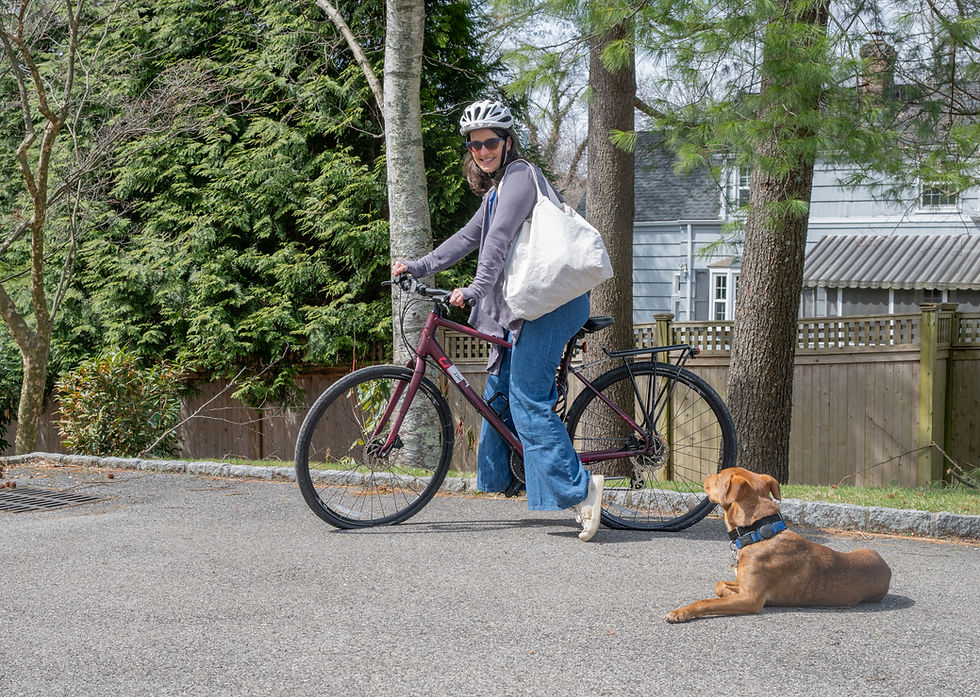
As your common sense will tell you, none of our individual actions are going to move the needle on climate change. If I never ate another ounce of meat, never flew on another plane, always biked to the farmer’s market – obviously with my reusable bags slung over my shoulder – and powered my house with only solar and wind, nothing would change.
This, by the way, is why the “individual carbon footprint” concept that Ogilvy & Mather, BP’s PR firm, came up with is so effectively, infuriatingly paralyzing. Short story: the intent of the PR was to play on our guilt and make us feel hopeless, while distracting us from the big levers of change.
By itself, a reusable bag isn’t going to save us. But, a reusable bag can shift how we see things, what we talk about, our societal norms – and that could save us.
“One of the biggest reasons our actions matter is that what we do changes us. And, the other big reason is that what we do and say changes others, too.” - Katharine Heyhoe
The majority of Americans are worried about climate change - BUT we rarely talk about it. A recent poll by the Yale Program on Climate Change Communication found that 64% of Americans “rarely or never” talk about global warming. The same poll found that almost the same number (63% of Americans) are also “greatly or moderately worried” about global warming.
Worrying about something and not talking about it…um, that is a surefire recipe for anxiety.
So, first of all, we could do ourselves a favor by acknowledging the elephant in the room.
Second of all, we can talk about it – politely, kindly, comfortably, if, like me, you get a little panicked at the thought of conflict. Or, maybe that’s just my issue! However you want: let’s talk!
Have you heard of Erica Chenoweth’s 3.5% rule? Chenoweth looked at hundreds of protest campaigns and found that “it takes around 3.5% of the population actively participating in the protests to ensure serious political change.” That’s not that much. Especially considering that 63% of us are concerned. But, we have to bring the issue into conversations so that politicians and corporations are motivated to make changes that really do move the needle.
Emma Pattee also talks about the idea of a “climate shadow” to counter the PR of a climate footprint. A climate shadow is a way to visualize how much you impact the climate – and talking about it is a big way to make that shadow helpful.
Silence is a type of denial. A type that makes it very easy for leaders to ignore climate as an issue. We don’t have to be experts. We don’t need to have answers. We just need to ask questions, create conversations, and make climate enough of a “thing” in our common culture that politicians and corporate leaders can’t ignore it. So, what if we did?


Comments